


What is cotton? Complete guide, history, best practice for printing and its features
Cotton is a natural product and comes from the cotton plant. Cotton fibers are obtained from the hair of the seeds of this plant. These fibers are spun into yarn and used to make soft and breathable textiles. Today, cotton is produced all over the world, but most of the farms are in countries with warm climates is more.Cotton plants need a lot of light and heat. Cotton fiber has been cultivated for 7000 years and its popularity is increasing day by day. The characteristics of these fibers can be mentioned: softness, non-sensitivity, long life span, etc. Therefore, it is not surprising that many designers like to use this fabric. Another reason for its popularity is that modern technology combines it with other fibers and creates special works. In the following, we will provide you with more information about these fibers…
What is cotton?
Cotton is produced from the natural fibers of cotton plants in tropical and subtropical regions around the world. It is mainly composed of cellulose, an insoluble organic compound. The word cotton is derived from the Arabic word “qutun”, but it was first produced in India (which is still the number one producer in the world), followed by China and the United States.You can also find it anywhere from Brazil and Mexico, where the greatest diversity of wild cotton species is found, to Turkey, Pakistan, and Australia. Cotton fibers can hold 24 to 27 times their weight in water. They are strong, absorbent and can withstand wear and high temperatures. In a word, cotton is comfortable. Since cotton shrinks, mixing it with polyester or applying some permanent coating will give cotton garments the right properties. Cotton fibers are often combined with other fibers such as nylon, linen, wool and polyester.The various cotton plants grown as agricultural crops are mostly native to the subtropical regions of the world and have been independently domesticated several times. Cotton can be found as perennial tree-like plants in tropical climates, but It is usually cultivated as an annual shrub in temperate climates. While its height reaches up to 6 meters (20 feet) in the tropics, its height under cultivation typically ranges from 1 to 2 meters (3 to 6.5 feet) is variable. Within 80-100 days after planting, the plant produces white flowers that turn reddish.The fertilized flowers fall off after a few days and are replaced by small triangular green pods. The pods mature after a period of 55 to 80 days. During this period, seeds and attached hairs grow inside the boll, which increases in size significantly. When the boll is ripe, it becomes white and fluffy like a ball and then bursts. Each flower consists of three to five cells, each of which has 7 to 10 seeds, which are embedded in a mass of seed fibers. Two-thirds of the weight of the cotton seed (that is, the seed attached to the seed hair) is made up of the seed.
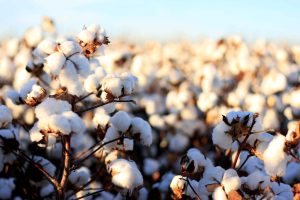
Cotton accounts for approximately 40% of clothing production
The cotton gin originated thousands of years ago, but in the modern era it has become a staple of textile production. Today, it accounts for about 40% of the clothes produced worldwide, because it is absorbent, soft yet strong, and easy to care for. Moreover, its natural fiber is hypoallergenic, which basically means that everyone can wear it as it is comfortable for sensitive skin as well.
History
Cotton is grown in tropical and subtropical regions around the world and accounts for approximately 2.5% of the world’s arable land. With a rich and sometimes controversial history, cotton has been cultivated for thousands of years and has been used specifically to make textiles since prehistoric times. However, it was not until the 5th century, when the cotton gin was first invented in India, that cotton became affordable and widely used.
There are some basic factors that should be considered before printing on cotton:
The fabric for printing must be absorbent (that is, there should be no food, softener, soap, or additional substances on it that will disrupt the absorption of color on the fabric).
The fabric must be clean (that is, there should be no oil, dirt, stains, etc. on it).
The fabric should be smooth and uniform in width and length without waves.
Using the right threads in spinning is a very important factor. Because if there are other impurities in the fibers, the dyeing on the fabric will not be done properly and its quality will decrease, or during printing, there may be tearing of the fabric, fading or fading of some parts of the fabric.
It has been reported that 60% of textile printing defects can be traced to fabric preparation problems. Often the company that prints the fabric is not the same company that makes the fabric.
Properties and characteristics of cotton
Skin-friendly: Cotton is super comfortable to wear, so it doesn’t irritate the skin.
Soft: The cotton plant is naturally soft and fluffy, and the cotton fabric maintains a soft feel.
It is environmentally friendly: cotton is a natural fiber and has the ability to be reabsorbed in nature.
Absorbent: The space between cotton fibers means that cotton is absorbent and can store moisture.
Breathability: The gaps in the fibers also make the cotton fabric breathable.
High durability: Cotton has high resistance and becomes stronger even when wet.
Machine washable
Machine washable: Cotton’s wet strength means you can put it in the washing machine without worrying about fraying.
Easy dyeing/printing: Cotton fibers can absorb dye well, so it is easy to dye.
Static Free: Cotton doesn’t conduct electricity, so you won’t get static shock like some synthetic fabrics.
These properties make cotton a popular fiber in the textile industry.
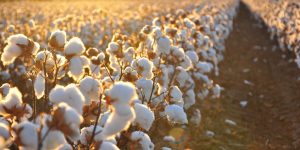
Cotton print
There are different ways to print cotton fabrics or natural fiber fabrics. We have collected some of the most popular or common methods and explained them below.
1. Stamp printing
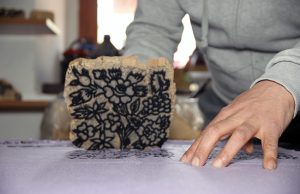
In this type of printing, a stamp is created, which is then used to print on the fabric. It’s similar to making potato stamps as a child to create beautiful drawings. Your design is engraved on the stamp, then dipped in ink, and with even pressure, the ink is transferred from the stamp onto the fabric. The level of detail you can get from stamp printing is limited, so it’s not suitable for more complex designs.
2. Screen printing
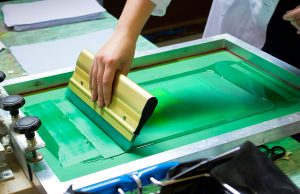
Actually, the image printing operation is done by a net with very small holes. This efficient mesh is placed in a fixed mold and used for printing. When they want to print a special image on the fabric, they actually create this image on the mesh screen. Parts of this net that do not need to release color are covered by special materials called emulsion. In this method, you can only use one color for each page and there is a color limit.
3. Roller printing
The working method in this type of printing is that the fabric is first linted by a number of rollers and its wrinkles are opened before the printing stage. And in this way, it is ready for printing. At this time, the fabric is placed on the blanket. The roller stencils that have the design on them are installed in a cylindrical form so that printing can be done without stopping. The printing paste is fully automatically injected into the patterned rollers and transferred to the fabric from there. But in this printing, there is a limitation in the design and it is not possible to print large designs.
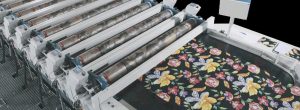
4. Pigment printing
Pigment printing is another method for printing cotton fabric and natural fibers. This printing can also be used on mixed fiber fabrics. Pigment printing is a type of direct printing. Direct printing is included in the category of printing methods in which the design is printed directly on the fabric. By using pigment ink, the color sits on the fabric and is held firmly in place by a bonding material such as resin. The binder and resin act just like glue to keep the color on the fabric. The pigments in pigment ink have larger molecules than other inks. Printing with pigment ink is easy to recognize because the fabric is harder than other printing methods due to the presence of materials such as resin.In general, bolder and clearer colors have a rougher texture than pale colors.
5. Reactive digital printing
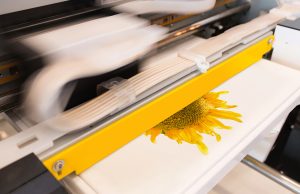
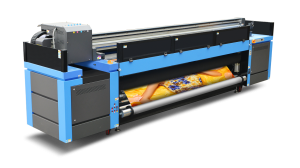
Reactive printing is one of the best methods of printing cotton fabric and natural fibers, which is done by spraying color on cotton fabric or natural fiber fabrics. It creates a covalent bond and will not be separated in any way. Finally, you will have a uniform print, without limitations in design and color, beautiful and bright colors, dark and light shadows using this print.
Result:
With a brilliant history in the field of providing digital reactive printing services, Arachip Rangin Sepahan is trying to provide high-quality and excellent printing to companies, fashion houses and manufacturers. This company is obliged to implement the designs desired by the customers on cotton fabrics and other natural fiber fabrics such as: linen, viscose, modal, silk, linen and wool with the highest quality and a wide range of colors. to do
Click for cooperation and more information