

What are the cotton dyeing methods and what are the steps before dyeing?
From the beginning of creation until now, humans have a great desire to observe beautiful and colorful landscapes all over the world, and this desire has been achieved by drawing paintings in caves and on various colorful objects and printing natural and artificial fabrics. With natural and artificial dyes and… has shown In the past, people used natural vegetable, animal, mineral, etc. dyes to paint their bodies and clothes, such as dyes, saffron, indigo, red seeds, colored clays, walnut and pomegranate skins, etc., and with the expansion of the population, Chemical dyes gradually replaced these old dyes.Today, millions of chemical dyes are made all over the world, and people have turned to them due to the ease of preparation and use, variety of colors, cheapness and high added value, high color stability, brilliance and wide application. , direct, reactive, bent, sulfur, acid, base, disperse, etc. dyeing, each dye is used under specific conditions and according to its prescription and diagram. Cotton is one of the most consumed textile goods in the world, which is used alone or mixed It is used with other fibers. Cotton dyeing is very easy due to its high hydrophilicity and moisture absorption properties, and it can be dyed with many groups of dyes, such as direct, reactive, bent, sulfur, naphthalene (azoic), etc.
Operations before dyeing cotton goods
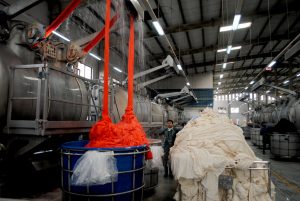
Since the operation before dyeing cotton goods is important in the quality of dyeing and increasing customer attention and increasing the added value of the final product, therefore it is discussed in this section. The cotton goods that are brought from the spinning and weaving section to the dyeing section often contain grease, wax, agar, oil of spinning and weaving machines, mineral substances, spinning oil, various stains, dust, lint and knots on the surface of the fabric, proteins and It is impregnated with other natural and unnatural colors. If the mentioned materials are not removed or reduced in the dyeing section of the goods, there will be problems such as unevenness of dyeing, reduction of dye absorption, creation of two colors in dyed fabric, reaction with dyeing auxiliary materials and reduction of fabric color quality.
Cook and wash
After the cotton fabric is bleached, the cotton goods are cooked to remove natural fat, pectins, pectoses, amino acids, waxes, proteins, cotton, particles obtained from cotton seeds, minerals, etc. d caustic (about 10 to 20 grams per liter compared to the volume of cooking liquid) or sodium carbonate.Of course, other auxiliary materials such as an active surface substance or detergent (chemical soap) (at the rate of 2 grams per liter of emulsion) as an emulsifier and detergent, sodium silicate at the rate of 2 grams per liter as a stable emulsion retainer, etc. sodium hydroxide as a stimulant in the amount of 1 gram per liter and a hardener and solvent remover such as E.D.T.A should be used. It is better to use diluted caustic soda in the amount of 2 to 6% compared to the weight of the product for cooking cotton fabric, and set the temperature of the bath at 70 degrees for the first half hour. The operations are done.When cooking cotton goods, pay attention to parameters such as profit concentration, type and concentration of auxiliary materials, operation temperature, operation time. If the temperature reaches 130 degrees Celsius in the machine under pressure above 1 atmosphere, the time of cooking operations and other auxiliary materials will change. For example, in open ovens, the maximum time is 12 hours, and in pressurized ovens, maximum time. It is 6 hours. In the continuous method without pressure, cooking in the G-box machine lasts for 1 hour and in the G-box machine under continuous pressure, it takes about 2 minutes. Fabric baking machine is open and closed intermittently under pressure and continuously without pressure and under pressure such as jigger or autoclave, open and closed keyer, winch, J-box, etc.
Bleaching of cotton goods
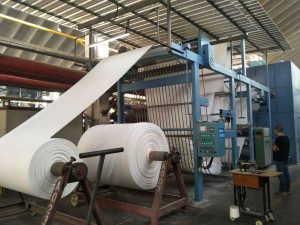
Three to the extent of the pitchers there is a yellow color on the yellowish, so that this material is more likely to be used and the same as it is. It will be reduced to the color. Bleaching can be done, but bleaching is necessary to create bright colors. Today, oxygen water, sodium chloride water, and sodium chlorite are mostly used for cotton bleaching, because oxygen water is more common and also soaks the materials. E, sodium silicate, sodium carbonate and soda Caustic is used.The pH of the bleaching bath is around 10 to 11. The temperature of the bleaching bath is 90 degrees Celsius. For each liter of bath water, 2 to 3 cc of 3 to 5 percent oxygenated water solution is needed. Material flow And it prevents future problems. For example, according to experience in bleaching, the amount of oxygenated water in the amount of 3 grams or 6% of the weight of the product will give a good result.
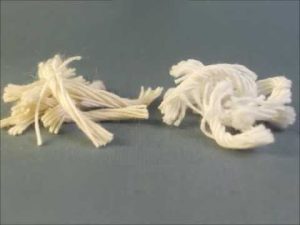
Cooking and blanching can be done at the same time, which is very economical. It should be noted that at a temperature above 100 degrees centigrade and under pressure, no air should remain inside the tank, because the oxygen in the air is converted into cellulose with cellulose in an alkaline environment and turns the fabric yellow and the underside of the fabric rough. while consuming profit Caustic acid more than 8% of the weight of the product will cause the fabric to turn yellow and remove all the cotton fat from the fabric and roughen the underarm.Also, not properly neutralizing the oxygen water will lead to further problems such as a decrease in strength and unevenness, so they empty the bathroom after bleaching and rinse the product once. In the second time, half to thirty 3 per liter of catalase enzyme are added to the bath and the product is treated at a temperature of 45 to 55 degrees and environmental conditions of pH 5 to 7 and a time of 30 minutes. 90 degrees Use centigrade.Bleaching operations in rope form (special for light and thin fabric) and open width (special for thick and heavy fabric) in continuous, non-continuous and semi-continuous machines such as jigger, autoclave, keyer, g-box, winch, padbatch, padroll and …it will be done. In the figure below, the image on the right side is related to the bleached thread and the image on the left side is not related to the bleached thread. The bleached thread looks whiter and more transparent.
Dyeing cotton with direct dyes
Direct dyes are one of the cheapest and most widely used dyes suitable for cotton dyeing, which is easily dissolved in water and has a negative (-) charge, and dyeing with it is very easy and simple, but the brightness and color stability are good. they don’t have For example, washing, drying, bleaching, contact with body sweat, light radiation, abrasion and rubbing, etc. cause color change, fading and displacement of the color and fading of the original color. Direct and different dyes are often done at temperatures between 20 and 95 degrees Celsius and for a period of 45 to 60 minutes.
Dyeing cotton with direct dye in the industry
After the stages before the dyeing of the textile product, it is the turn of the dyeing of the textile product, which is done by dyeing machines in the industry sector. There are many machines in the dyeing industry that are capable of dyeing non-woven fibers, yarn, coils and fabric. Dyeing machines are usually designed and built in such a way that the product or solution or both of them are moving. Each dyeing machine will have the ability to dye some textile products according to the characteristics and capabilities of the textile product and the machine.
Dyeing cotton with reactive dyes
Reactive dyes are part of water-soluble powdery dyes with high brightness and stability, which with the help of salt and caustic soda absorb the material of cotton goods. Yaf Rangza and this has increased its washing stability (not losing its color due to washing). Reactive dyes are divided into two categories: cold reactive and warm reactive.Cold type reactive dyes have high chemical activity and reactivity and are used at a temperature of 20 to 35 degrees centigrade. Warm type reactive dyes have less chemical activity and reactivity and are used at a temperature of 40 to 80 degrees. Centigrade is used.
Reactive dyes are used on cotton goods during three stages of dyeing, fixing and washing. In the dyeing stage, a physical or close connection between the dye and the product is made from salts such as sodium chloride and sodium sulfate for Better absorption of pigment on the product It will be.In this stage, by increasing the time, temperature and salt to a certain extent and reducing the L:R (until it causes non-uniformity), this connection can be strengthened. In the stabilization stage, by creating a suitable alkaline environment (corresponding to the concentration of the dye used) by adding an alkaline solution such as sodium carbonate or sodium hydroxide mixture several times, the physical connection between the dye molecules and the textile product will be connected. It becomes a strong medium The final stage of washing and soaping the product in several stages according to the recipe, the dyes that have not bonded are separated from the product.
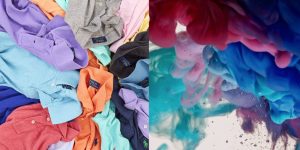
Dyeing cotton with reactive dye (industrial method)
After finishing the preliminary dyeing operations on the cotton goods, dyeing operations can be carried out on it. Dyeing operations with reactive dyes on cotton goods by all three non-continuous methods such as winch and jigger, semi-continuous method such as pad – A child or Two baths and a continuous method, such as one bath pad-dry thermofix, one bath pad-dry-steam, one bath pad-thermofix without drying, one and two bath pads-steamer, hot shock, etc., depending on the possibilities, the capabilities of the fabric and the machine. And… it is possible.
Cotton dyeing with crude dyes
Soft dyes are insoluble in water and have very good washing fastness and brightness on cotton fabric. The most important disadvantages of these dyes are the complex problem and the time it takes to dye with them. Nowadays, the problem of the time it takes to restore and solve these dyes has been solved to a large extent with the production of soluble dyes. Most soluble soft dyes have bright colors and insoluble soft dyes are darker or darker in color. Soft dyes are available in the market in the form of powder or paste.
Dyeing cotton with soft dyes in the dyeing industry
Months and cotton fashioned methods with a need for a mobility of the cotton and the same as you can, and as a result of the use of the more visual methods, the messenger and the madum. This is the case. Liver is paid.
Dyeing cotton fabric with soft dyes in the jigger machine.
This dyeing method is mostly used for dyeing light-weight goods with open texture, where there is no risk of unevenness of dyeing. The ratio of volume of liquid to goods in this dyeing machine is between 3:1 and 5:1, and the dyeing is revived. 10 during 2 to 4 The passage containing caustic soda and sodium dithionite is added to the bath. Dyeing is done in 6 to 10 passages, and if necessary, salt is added to the bath in the first 2 to 4 passages. as determined While the goods are in motion, the bath is emptied and cold water is rinsed in two passages.After water extraction, oxidation is done at a temperature of 50-60 degrees and in two passages with the help of 35% oxygenated water at the rate of 2-4 cc per liter. After oxidation and cold water extraction, dechlorination with sodium bisulfite About one gram liter, it is done in two passages, and after rinsing again, washing is done in 2-4 passages with detergent and soda at boiling temperature, and finally it is rinsed with hot and cold water, and if necessary, the alkali is neutralized by acetic acid. d After washing, the fabric is rolled on a special roller and transferred to the fabric water absorption and dryer section.