

Getting to know the types of fabrics and their categories
It may still be difficult to distinguish fabrics from their texture even for people in the clothing industry. Therefore, in this article, you will get to know the most common weaves of fabrics that you encounter on a daily basis. The main ones are: without weaves, flat weaves and dust weaves.
What is fabric texture?
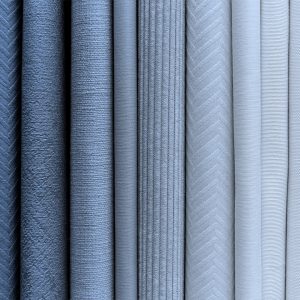
The texture of the fabric consists of interweaving at least two sets of threads perpendicular to each other: warp threads: in the direction of the length of the fabric, weft threads: in the direction of the width of the fabric. Today, weaving is done on a loom, and the obtained fabric is described by the design of the texture. will be
Types of fabric textures:
The fabrics themselves are divided into the following three main categories:
1. Flat woven
2. woven
3.Non-woven
1.Flat woven :
A variety of designs are formed from the placement of warps and wefts in the various textures of fabrics. The way of weaving and interweaving of thread taropods to produce flat woven fabric follows a simple weaving technique. In this way, thread taropods are crossed over each other and By connecting these fabric taropods to each other, a strong texture is created, the texture of these fabrics is called flat texture. Flat woven fabrics are divided into many categories, including:
Chest tissue:
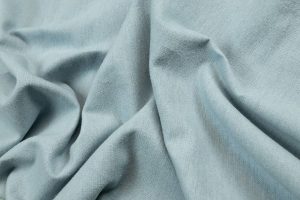
In general, twill fabric is woven by passing the weft thread over one or more warp threads and then passing it under two or more warp threads. This technique results in what is called a “step” pattern, where diagonal lines appear after the fabric is finished.
Satin texture:
In this design, the threads or wefts are flat on most of the surface of the fabric, and the surface of the fabric is smooth and uniform and without crooked lines. This type of texture design is one of the most popular fabric texture designs. This texture is more expensive compared to other designs because it creates a special effect.
Jacquard weave:
Jacquard is a fabric that has a design or pattern woven into the structure of the weave. Jacquard comes in a variety of designs, dramatic ornamental flowers, stripes or geometric patterns. Jacquards are woven on a special and complex weave. By raising and lowering the threads, the arrangement of the warp and weft is determined, then the desired pattern or effect will be created.
Serge texture:
Serge is a type of textile fabric with diagonal parallel rib pattern. Serge weave can be identified by looking at the diagonal lines that appear to run across the width of the fabric.
Taffeta:
The taffeta texture is just like the houses of a chess board, where the warp and weft threads have passed through each other. This weave is one of the basic weave patterns that is woven in the same way and many fabrics follow this pattern.
2. woven:
Round woven fabrics are made of circular threads, which are pulled from one side by a ring similar to itself. Other fabrics are made of warp and weft threads, but in woven fabrics, the loops are connected to the rest of the loops and are knotted. In fact, the woven fabric does not have seams and its sides are joined together.
Jersey fabric:
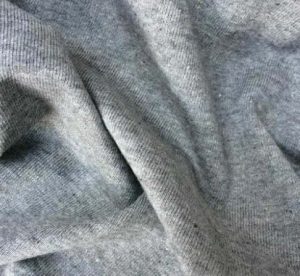
Jersey is a single woven cotton fabric known for its stretch and softness. Because of the way the stretch is knitted, there is a natural stretch without the use of stretch fibers like elastane. You know jersey as the fabric you use to make your favorite cotton t-shirts, but did you know that jersey is also used to make bedding and sheets? Sheets made of jersey are stretchy, soft and wrinkle-resistant. Jersey fabric is so named because it was first produced on the Channel Island of Jersey during the Middle Ages.
Ring texture:
In this type of weaving, knitting machines are used. Circular fabrics are made up of small units called loops, and circular weaving is formed by bending a part of the thread in the shape of a loop and passing these loops inside each other.
Tricot texture:
Tricot is a type of knitted fabric that is usually used in the textile industry. It is known for its smooth and delicate texture and the ability to stretch in both directions. Knitted fabrics are made using warp knitting technique, which consists of interconnected loops of threads that run vertically. The process of making knitted fabric involves weaving threads in a specific pattern. This process is done using a warp knitting machinewhich has a series of needles arranged in a vertical row. As the machine operates, the needles move up and down, connecting the yarns to form the fabric. Tricot is known for its elasticity and ability to retain its shape even after repeated stretching. has been This makes tricot an ideal fabric for use in garments that require a lot of stretch, such as sportswear, lingerie and swimwear. Tricot is also commonly used in lining fabrics because it has a smooth, soft texture that is gentle on the skin.
Rachel’s texture:
In a Rachel knitting machine, there are two rows of guide needles that guide the threads to weave and move around the tabbed needles.
In this method, the weaving of a row of needles is called warp, and each of these guide needles moves around a tabbed needle and creates a circular knot. The other row is called the weft, which can move between two or more tabbed needles and join the rows of the circular warp groups to form a surface. Rachel fabric usually has limited stretch and can be made in a variety of textures from fine to coarse.
Spun vortex:
The fibers used in this texture give the fabric a good elasticity so that it returns to its original state after being stretched.
Cotton spinning:
A combination of yarn and cotton is used in this fabric. This fabric has its own fandom and examples of it include single-ply cotton, duropeneh, Jodon cotton and Lakra cotton.
Jodon’s Whirlpool:
This fabric has a rhombus and needle-like texture. Among its features, we can mention its flexibility, matte effect, and softness. These fabrics are used in all kinds of women’s and men’s t-shirts, sports clothes, sleepwear, etc. Lakra jodon, cotton polyester jodon and cotton jodon are examples of woven fabrics.
Viscose swirl:
One of the characteristics of this fabric is its coolness and lightness. Another advantage of this fabric is that it does not become electric when rubbed.
Lakra swirl:
Lakra means elastic. Very small elastics are used in this fabric, which gives it elasticity. This type of fabric is used in all kinds of uniform clothes, work clothes, swimming clothes, etc. Cotton lycra, melange lycra, viscose lycra, spun lycra and polyester lycra are examples of this type of fabric.
Melange swirl:
In this type of fabric, yarn, cotton and polyester are used. This type of fabric is widely used in formal dresses.
Non-woven :
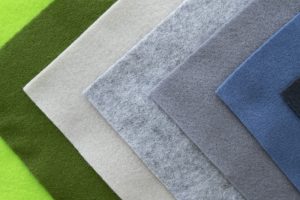
Nonwoven fabrics are generally defined as network structures that are interwoven by fibers and mechanically bonded together, thermally fusing the fibers, or chemically bonding the fibers. Currently, 30% of the textiles in the world are non-woven and their number is increasing day by day. The most common use of these textiles is the following.
• Garment lining
• Car upholstery
• Civil engineering geotextiles
• Filters
• Floor Covering
• Garment bags
• Cleansing wipes
• Insulation
• Laundry bags
• Tea and coffee bags
• Vacuum cleaner bags
• Wall Plugs
• Wet wipes (home care, floor care, cleaning, pet care, etc.)
• Bulletproof vests
• Medical uses such as: medical gowns, masks, operating room equipment, etc.
• Sanitary napkin